Stuffed Animal for Dementia: Why a Familiar Voice Brings So Much Calm
Dementia takes much away. Names, faces, memories. But one thing often remains remarkably long: the recognition of a familiar voice.
People with dementia who no longer know the names of their children sometimes still respond strongly to their voice. That emotional recognition sits deeper than conscious memory.
This makes voice recordings a valuable tool in caring for someone with dementia.
How dementia affects memory
Dementia affects episodic memory: the memory for personal experiences and facts. But emotional memory, stored in the amygdala, often remains intact for longer. That is why people with dementia sometimes react strongly to music from their youth or to the smell of something familiar.
A familiar voice falls into the same category. It is an emotional stimulus that goes deeper than conscious recognition.
Reminiscence therapy and the role of voices
Reminiscence therapy is a recognised approach in dementia care where memories are stimulated through sensory triggers: music, photos, scents and voices. The approach helps reduce anxiety, restlessness and social isolation.
Many nursing homes and home care organisations work with personalised stimuli for residents with dementia. Voice recordings are a natural part of this.
How does a Hugify work for someone with dementia?
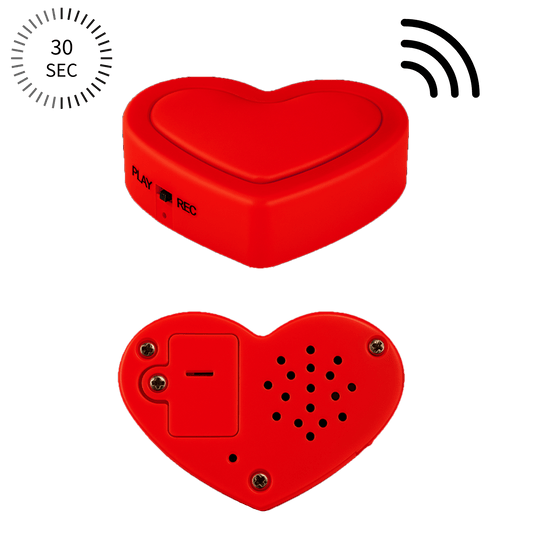
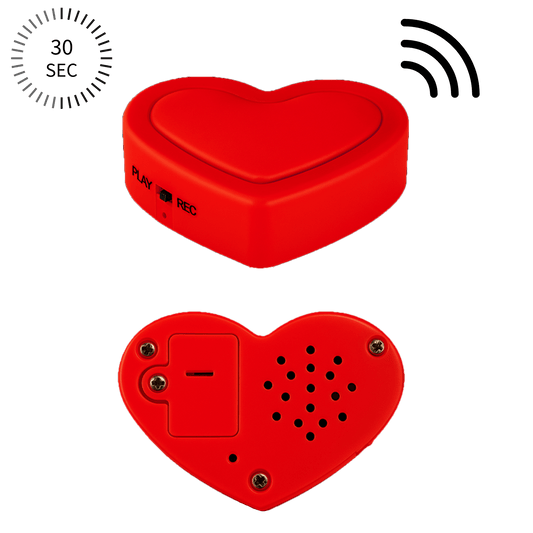
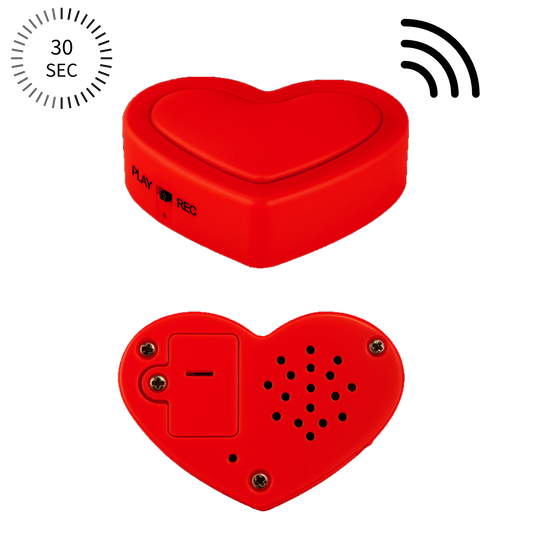
The Hugify is a soft stuffed animal with a heart-shaped voice recorder inside. Record a familiar voice: a child, a grandchild, an old friend.
Choose a familiar message:
- A song that was always sung at special moments.
- A prayer or mantra the person knows from their life.
- A simple, warm greeting: "Hello, I am [name]. I love you. Everything is fine."
Place the stuffed animal on the chair or by the bed of the person. Instruct the carer: when the person becomes restless, press the heart.
Practical experiences of families
Carers and family members who use the Hugify with relatives with dementia report that the stuffed animal has a calming effect during moments of restlessness, especially in the evening when the sundowning phenomenon occurs: the increase in confusion and anxiety at dusk.
The tangibility of the stuffed animal, soft and warm, combined with a familiar voice, offers a double reassurance.
Points of attention
- Choose a voice the person truly knows. An unfamiliar voice does not work and can even cause confusion.
- Keep the message positive and calm. No complex information. Warmth and repetition are most important.
- Renew the recording when the batteries are low. Check regularly that the recorder still works.
- Involve the care team. Inform the nursing home team about the stuffed animal and how the heart button works.
Conclusion
A stuffed animal with a familiar voice is not a miracle cure for dementia. But it is an accessible, warm and effective tool that can improve quality of life. For the person with dementia as a tangible anchor of connection. For the family as a way to remain present, even when physical presence is not always possible.